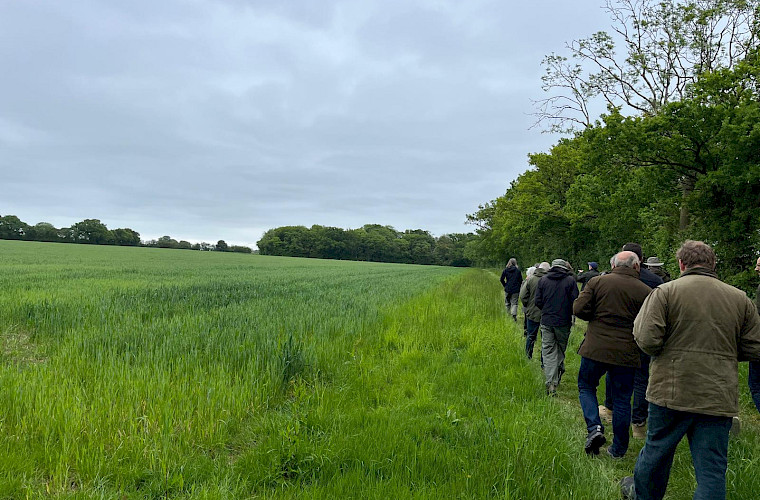
Wild Ken Hill is c. 1,600ha land holding in Norfolk on the Wash near to Snettisham. There are 3 aspects to WKH, rewilding, traditional conservation and regenerative farming. The income base reflects this diversity with nature-based tourism a growth area. Rewilding: 400ha of poorer farmland and woodland have been profitably returned to nature under CSS schemes. Management includes ponies, cattle, pigs and beavers (in a fenced enclosure – featured on BBC Spring Watch). We had a brief trailer tour through the rewilded areas and walked in the beaver pen. Evidence of the beavers’ dams, water retention and tree felling are apparent, creating an improved wet woodland habitat. In time, the challenge will be to manage beaver numbers for their optimum health and to prevent excess damage to trees.
Traditional conservation: around 200ha of freshwater marshes are actively managed for nature using best practice conservation methods. Water levels have been raised on the marshes though extensive earthworks and support curlew, bittern, little ringed plover, scare wildfowl and summer visiting waders. We did not see this part of the holding. Regenerative farming: WKH’s approach is centred on repairing soil health, boosting carbon sequestration and soil biodiversity. Through this approach, the aim is to profitably produce quality food, protect the climate, boost above-ground biodiversity on farm and use the farm as an education resource. We were guided through WKH’s approach by the estate director Nick Padwick. Nick is a qualified consultant for The Soil Food Web. This system recognises the “complex and interconnected community of organisms that play a crucial role in soil health and fertility. Fungi, bacteria, protozoa, nematodes, arthropods, and many other organisms essentially work together to ‘make’ soil.”
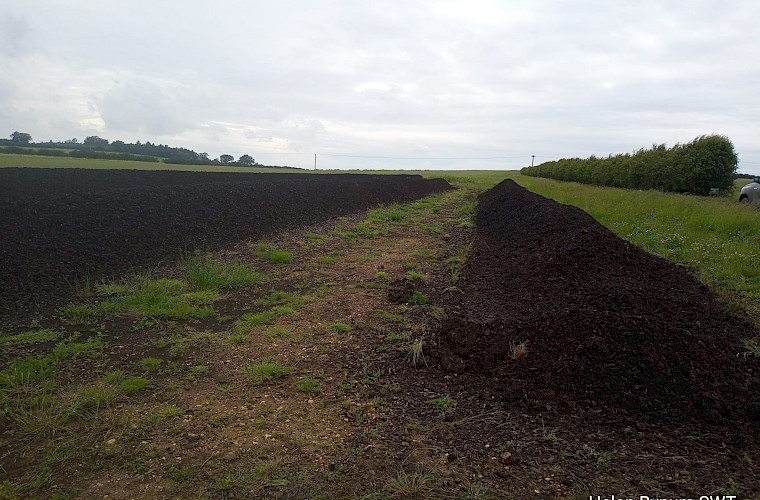
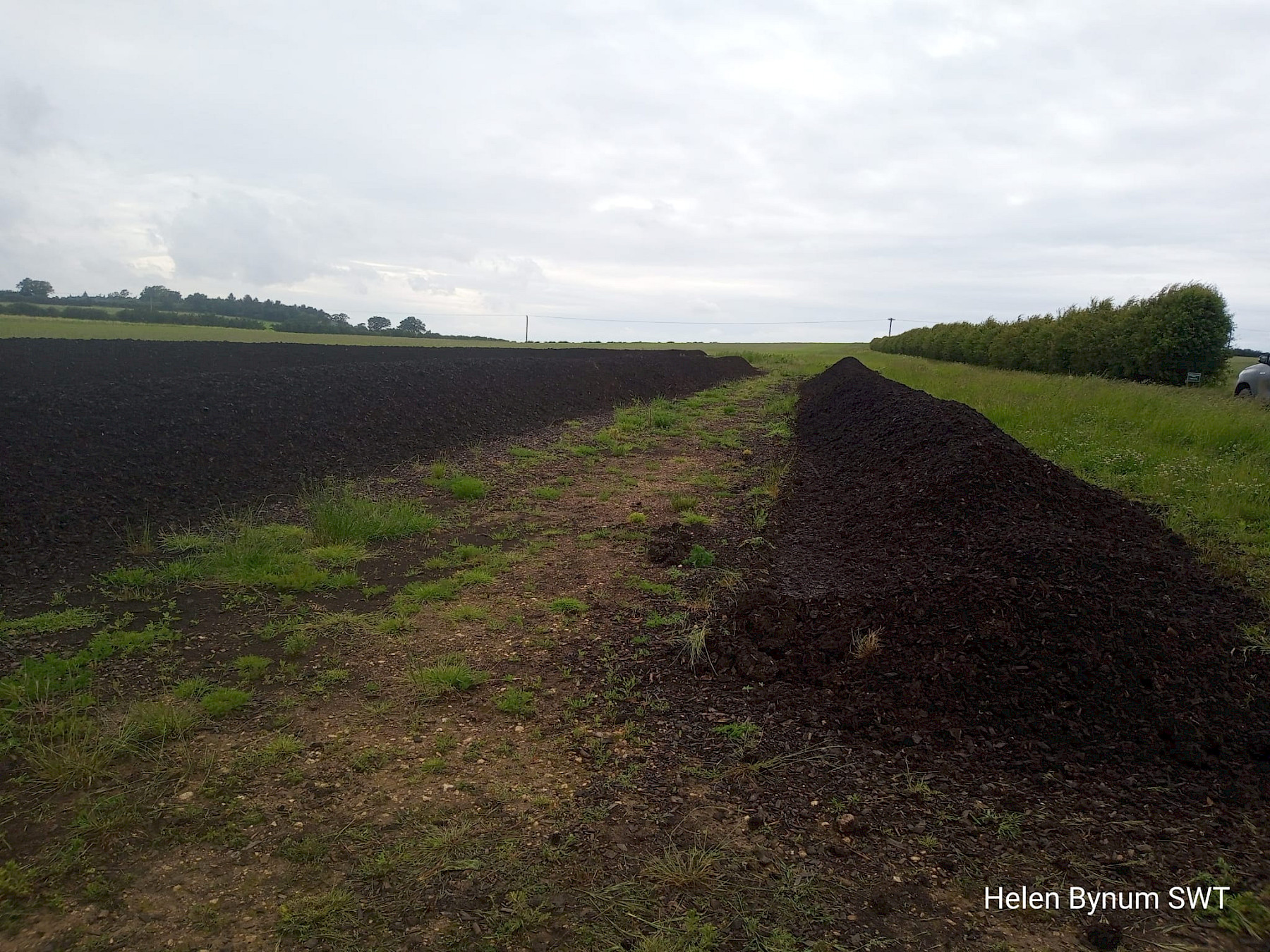
Nick talked us through the basics of the soil food web, microscopic assessments of the presence and absence of ‘good’ and ‘bad’ soil organisms and especially the role of mycorrhizal fungi in releasing key mineral elements in a form that plants can absorb. He explained his monitoring of living organisms in the soil at each stage of his farming cycle. He enlarged on his experimental approach to composting, which has seen small scale production of compost and liquid extracts or ‘teas’ expanding to meet the requirements of WKH’s farmed land. Compost is made from the green and woody resources of the farm and turned along the windrows with a tractor-pulled turner. The only bought-in component is a fish-based hydrolysate, which acts as a biostimulant for the naturally occurring soil microbes found in the compost, and not as a direct fertilizer.
Farm-scale deployment is achieved through the liquid extract spread in a bespoke adapted Tow and Fert liquid foliar sprayer. The bulk compost is put 1 into a holding basket in the sprayer and the resulting extract delivered to the land. Some of the compost, especially the woody part, is returned to the compost windrows for reuse. In the field Nick demonstrated the effects of his precision introduction of compost extract when the field is drilled. Under comparable conditions of organic min till the white fungal hyphae in soil immediately around the treated cereal roots were easily seen. They were not evident in the untreated field section. Nick’s view is that priming the seeds with the compost extract, especially after periodic light ploughing to break the weed cycle, quickly restores the fungi and allows the crop plant to better utilise the resources in the soil. He acknowledges that this is a work in progress and is looking at yields and inputs, especially machinery capital costs. WKH are training other compost makers and marketing the compost/extract as a service to neighbouring farmers. As only a few cluster members were able to attend the WKH visit, there is an option to invite Nick to speak at a meeting in the WTFC area.
Previous Post »
Autumn Meeting - Dove Barn, Groton